Refining Inferential Sensors in Coding Agent Harnesses
12 minute read

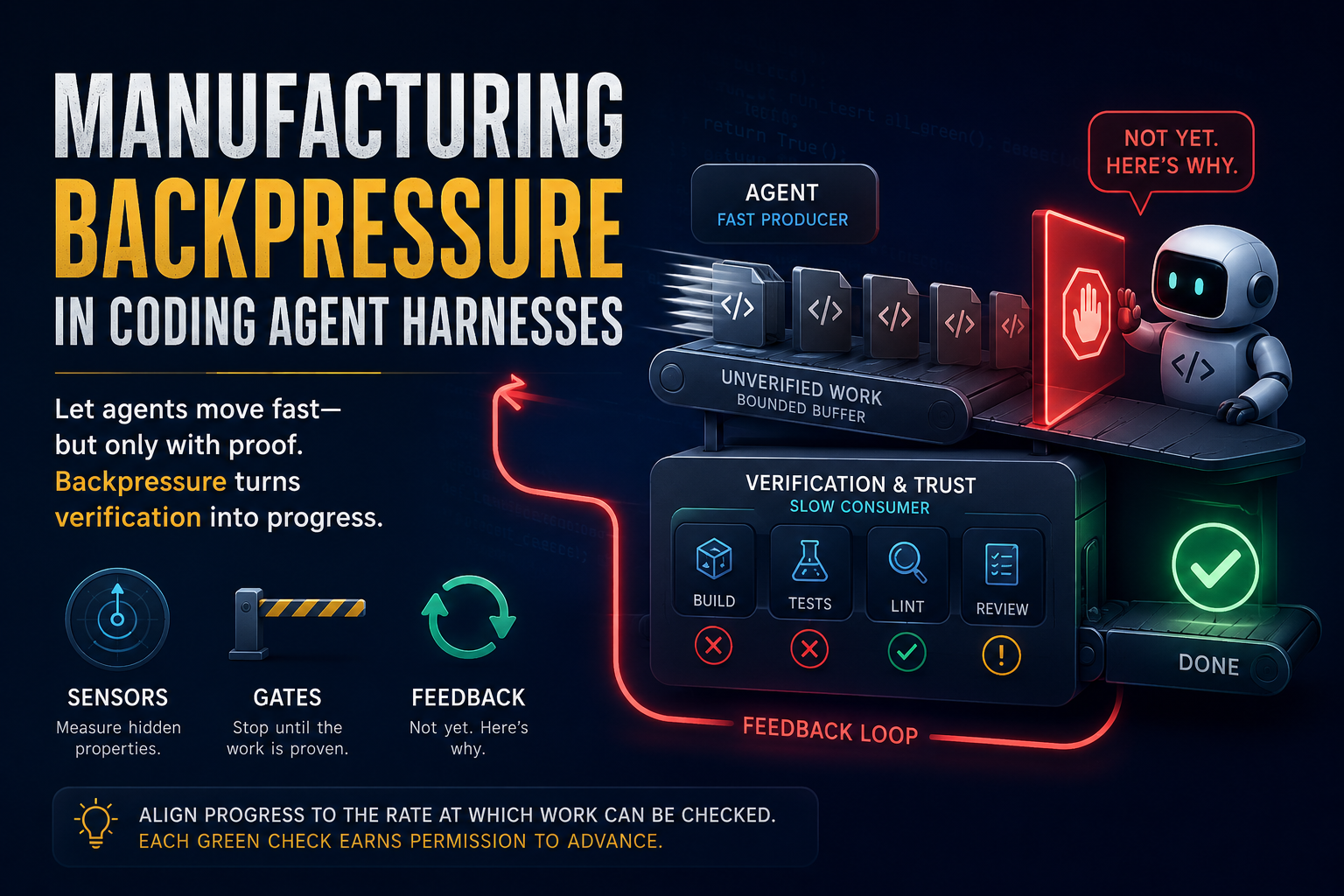
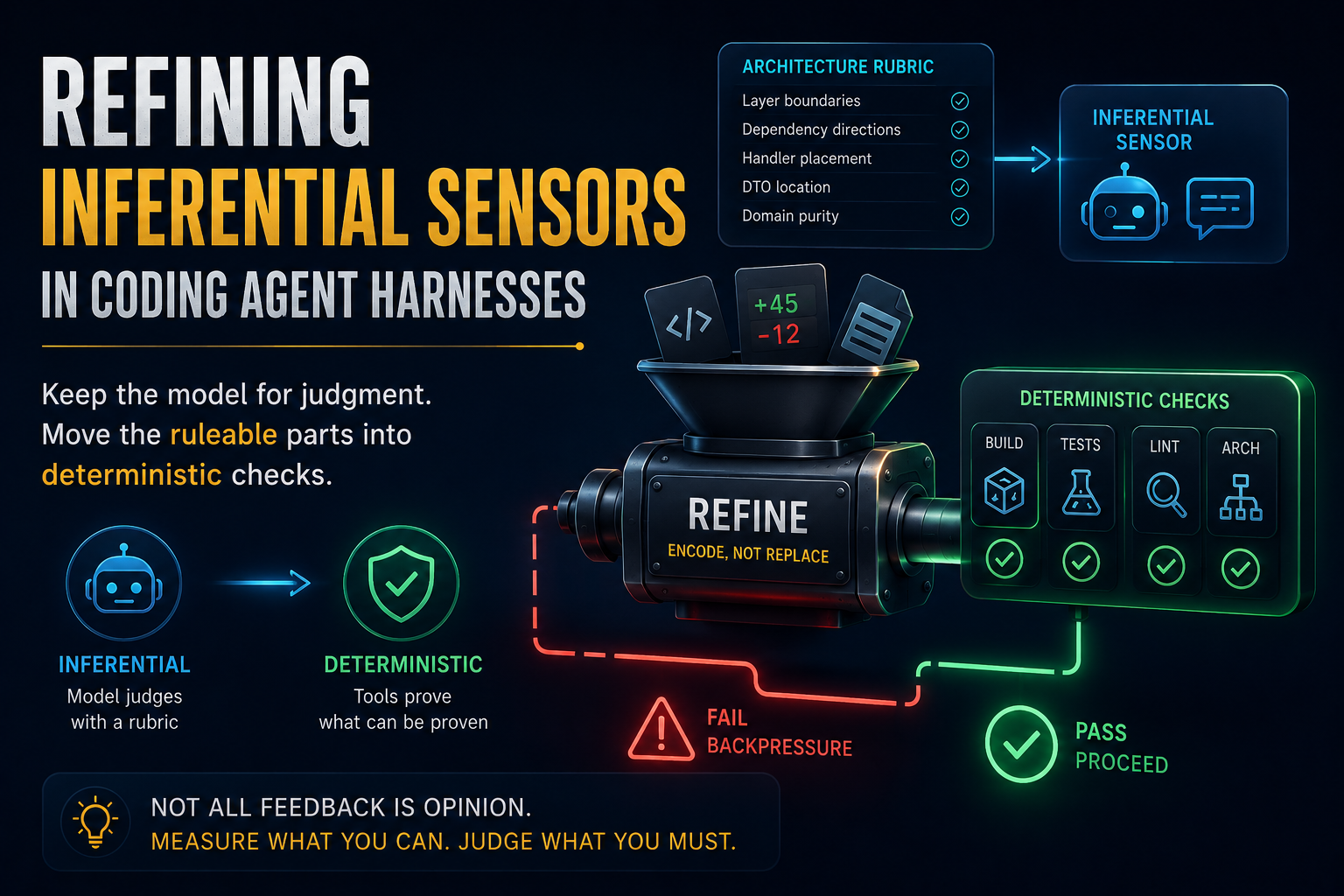
The fastest way to start checking an architectural rule is to ask the model. The expensive part is asking the model to keep rediscovering facts a tool could have measured. A good inferential sensor should mature: keep the model for judgment, and move the ruleable parts into deterministic checks.

Series:

Tags:

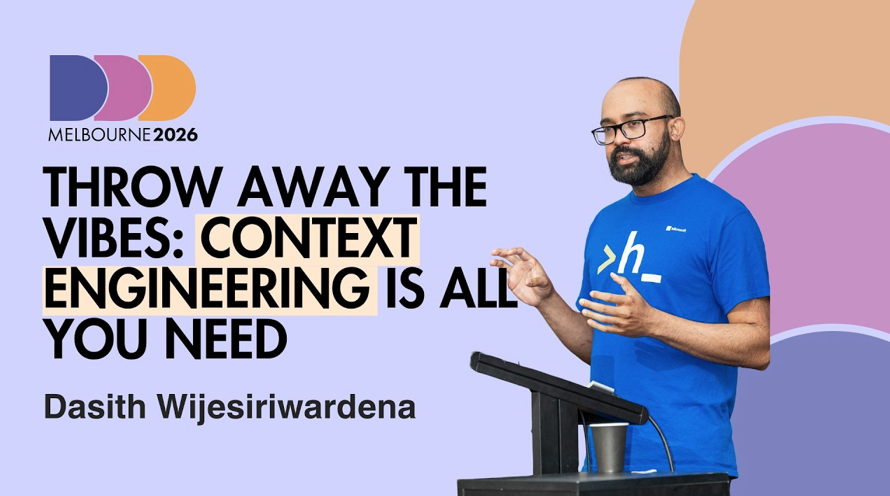
Throw Away The Vibes: Context Engineering Is All You Need - DDD Melbourne 2026

6 minute read

I had the opportunity to speak at DDD Melbourne 2026 about something that has consumed a lot of my thinking over the past year: how we actually get reliable results out of AI coding agents on real, messy codebases. The talk was titled “Throw Away The Vibes: Context Engineering Is All You Need,” and it distilled the practical lessons I have gathered while working on hypervelocity engineering workflows. Many of us experience an intoxicating high the first time we use an AI coding agent. The “Hello World” ...

Series:

Tags:

The Errand: What Sending a Kid to the Shop Teaches Us About Agentic Delegation

29 minute read

A story about what it really takes to send someone to do a job for you, and why that turns out to be a genuinely hard problem we’re now being forced to solve because of AI agents. Prefer to click through it? There’s an interactive presentation of this post that walks through the same story slide by slide. AI agents are software that doesn’t just answer questions, it goes off and does things for you: books the flight, files the expense, orders the groceries, emails the client. The moment software starts...

Series:

Tags:

Structured workflows for coding with AI agents using the Breadcrumb Protocol

7 minute read

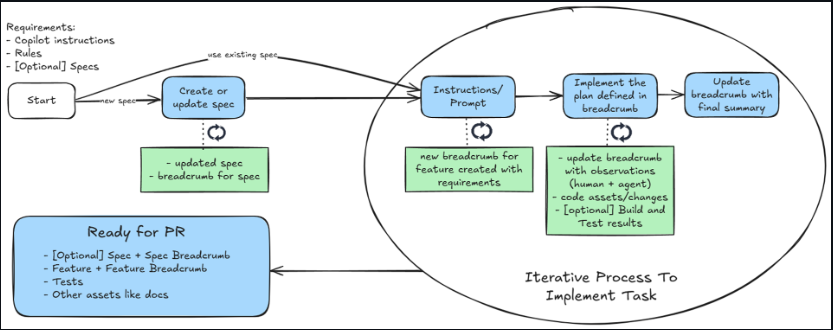
I’ve been exploring hypervelocity engineering workflows with AI agents like GitHub Copilot, and one fundamental challenge continues to surface: maintaining shared context alignment between developers and AI. While AI excels at generating code, it lacks inherent “memory” of past interactions and the nuanced understanding that humans naturally build over time. This alignment gap grows wider as projects become more complex, yet having a structured approach to bridge this divide is often overlooked. How can ...

Series:

Tags:

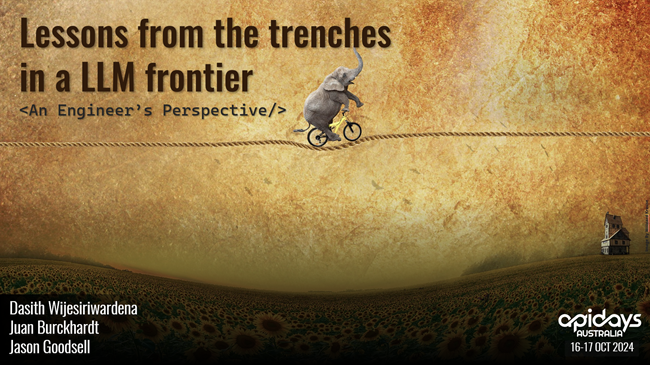
Lessons from the Trenches in a LLM Frontier: An Engineer’s Perspective - Apidays Australia 2024

2 minute read

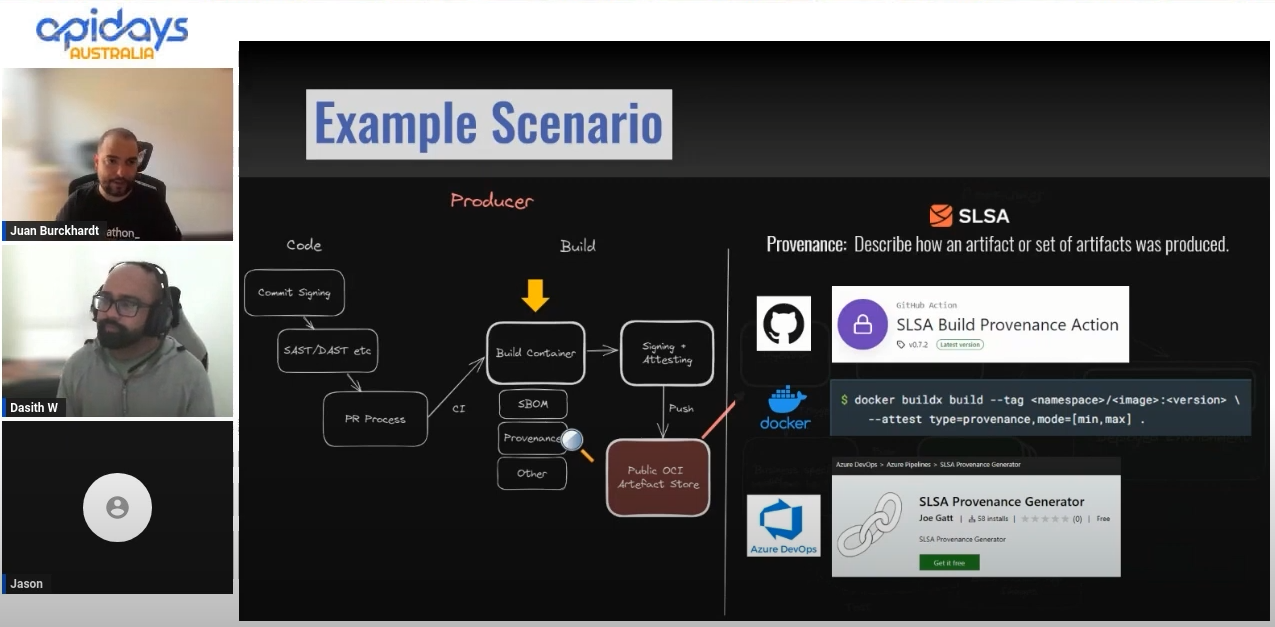
I, along with my colleagues Jason Goodsell and Juan Burckhardt, had the opportunity to present our key insights and learnings from the rapidly evolving world of Large Language Models (LLMs) at Apidays Australia 2024 in October. The talk, titled “Lessons from the Trenches in a LLM Frontier: An Engineer’s Perspective,” shared our experiences from the front lines of developing LLM-powered solutions. Our team has been deeply immersed in creating and integrating LLM solutions, observing firsthand the industr...

Tags:

LLM Prompt Injection Considerations With Tool Use

8 minute read

My team at Microsoft Industry Solutions Engineering have recently been building heaps of LLM based solutions for customers of varying sizes across industries. There are some patterns that are emerging from these solutions and today I wanted to write about a pattern we used at a customer to prevent a class of prompt injection attacks with regards to tool use. Some of it may seem trivial or just common sense from purely a security sense but remember that most teams building these solutions are cross functi...

Tags:

Building Trust Brick by Brick: Exploring the Landscape of Modern Secure Supply Chain Tools - API Days Australia 2023

3 minute read

I presented some my learnings around modern software supply chain security tools and landscape at API Days Australia 2023 and K8SUG Meetup in November. I had my team co-present the topic with me this time. My team in Microsoft Industry Solution Engineering have been building solutions to enable government and defence customer teams in Australia and secure software supply chains have been the main focus. With the renewed focus supply chains attacks and with the supply chain security endorsement by the W...

Tags:

What is ORAS and why should you care?

11 minute read

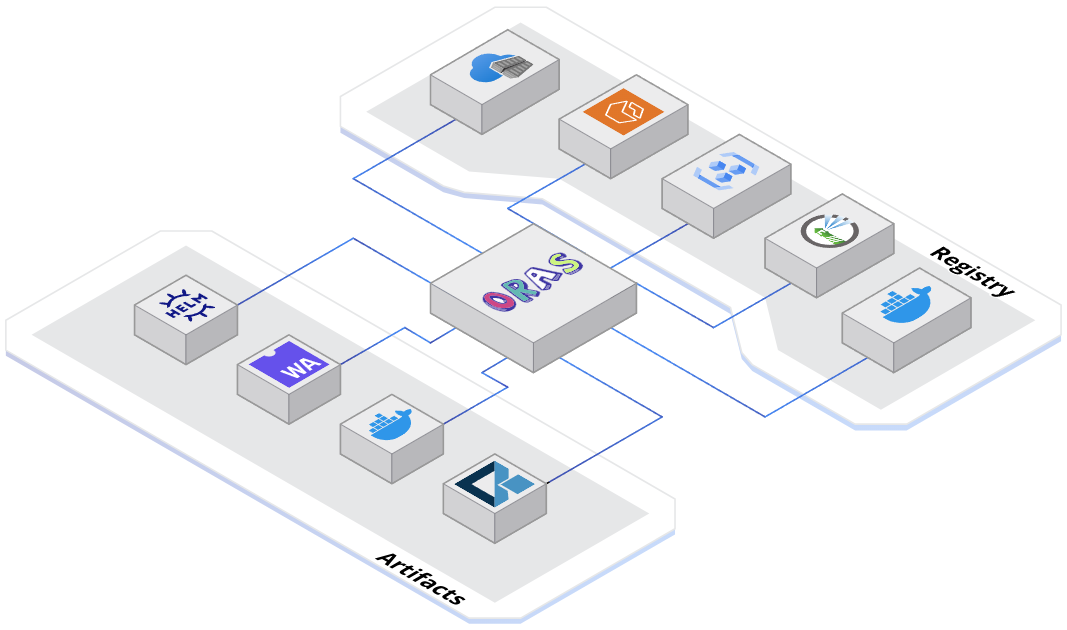
Most systems we build today are delivered as containers. Container registries and associated technologies are an important cog in this ecosystem. As the container ecosystem matures, there is an increased need to consume associated artefacts like Helm packages, software bill of materials, evidence of provenance, machine learning data sets etc from the same storage. There are even upcoming use cases like WebAssembly libraries that need a home. Container registries have evolved to become more than their ini...

Tags:

Instrument MQTT based python messaging app using Open Telemetry

9 minute read

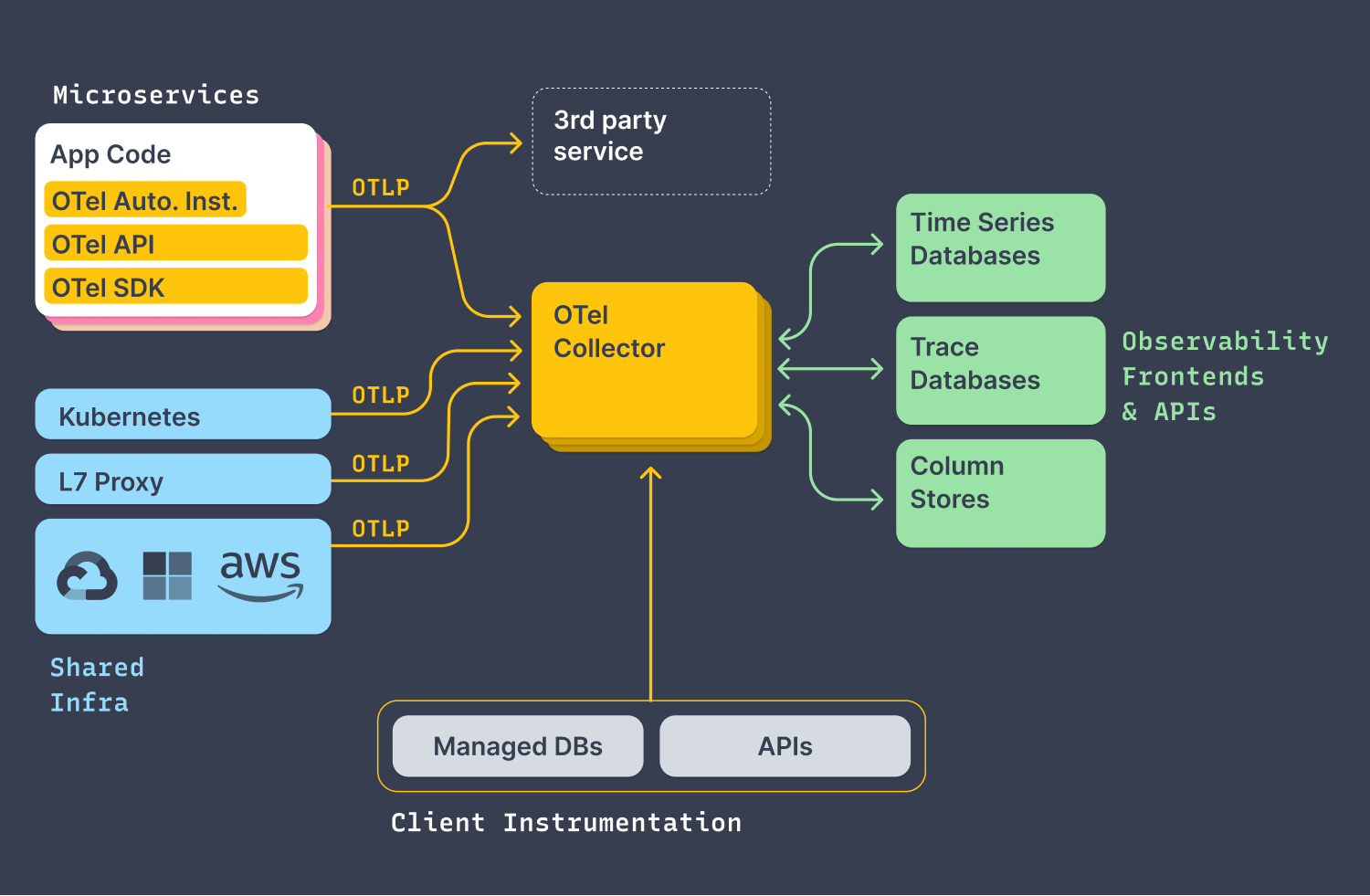
Some time back I did a bit of an intro to OpenTelemetry and in there I covered some basics like what Signals and Context Propagation are. I also spoke about how concepts like Tracing, Spans and Instrumentation interrelate to one another. I even put some code samples up at GitHub to demo this. Most if not all of those code samples are in .NET and they demo tracing and baggage. Since I did that talk in 2021 the OpenTelemetry community have decided to add logs as a signal. Logs Are a Signal There are 4 t...

Tags: